
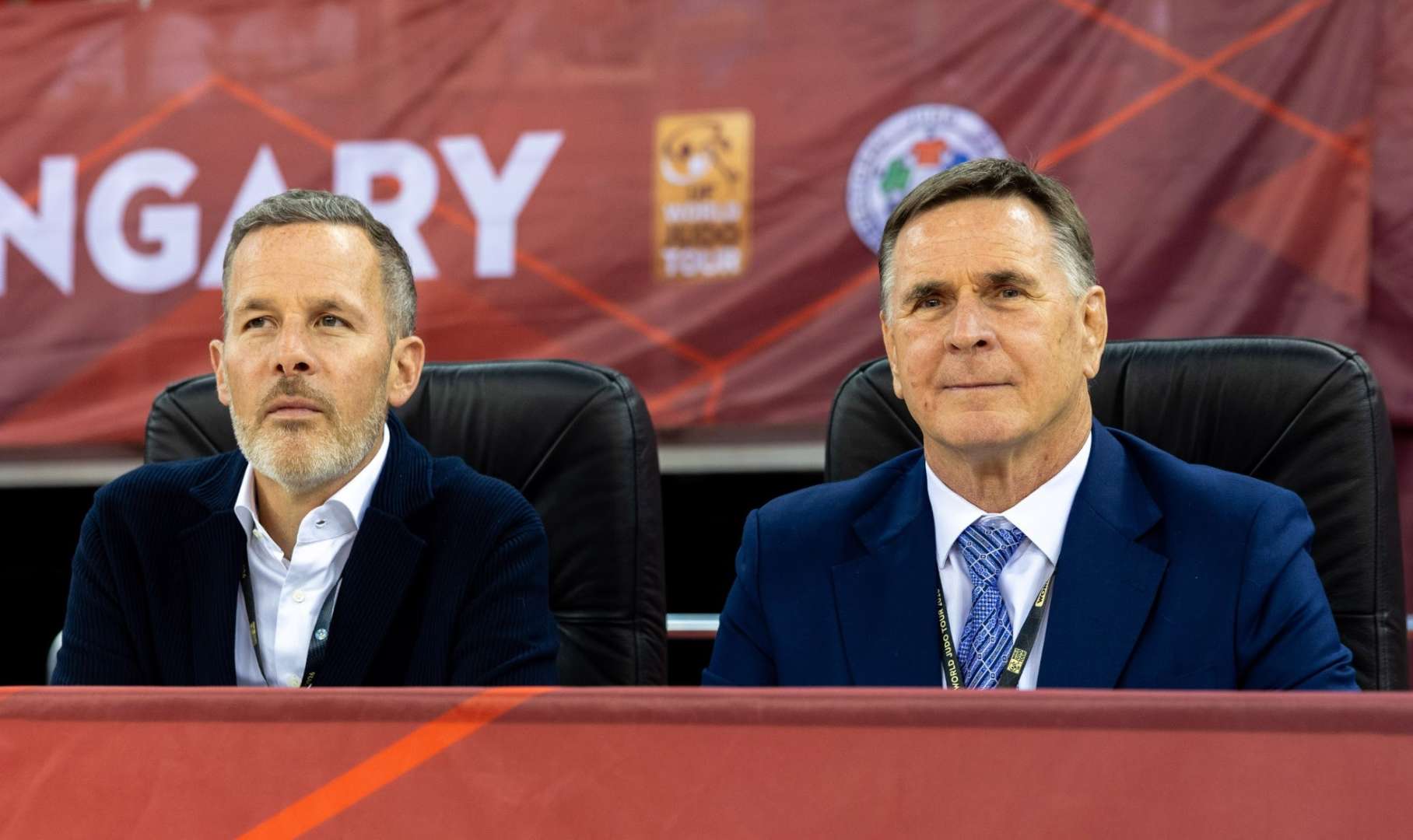
Accompanied by Larisa Kiss, IJF Director of Olympic Games and Olympic Movement for Judo, Mr Ducrey met the key people whose work contributes to the success of every event, from the competition and sporting operations to the many teams working behind the scenes.
A regular visitor to major international judo events, Pierre Ducrey is familiar with the atmosphere and quality of World Judo Tour competitions. However, the Hungary Grand Slam gave him a new opportunity to understand the detailed organisation required to welcome hundreds of athletes, coaches, officials, media representatives and spectators, while delivering three days of world class sport.

“It is the first time that I have had the opportunity to make a complete tour of an event like this,” he explained. “It is always a pleasure to be present at a sporting event and to discover how everything works.
You can feel very strongly here that there is already an important stake for all the athletes. The Olympic Games are in everyone’s minds and that makes the competition very interesting. I am happy to see that the LA28 Qualifier logo is displayed prominently, both in the warm up area and in the arena. These are important moments taking place here.”
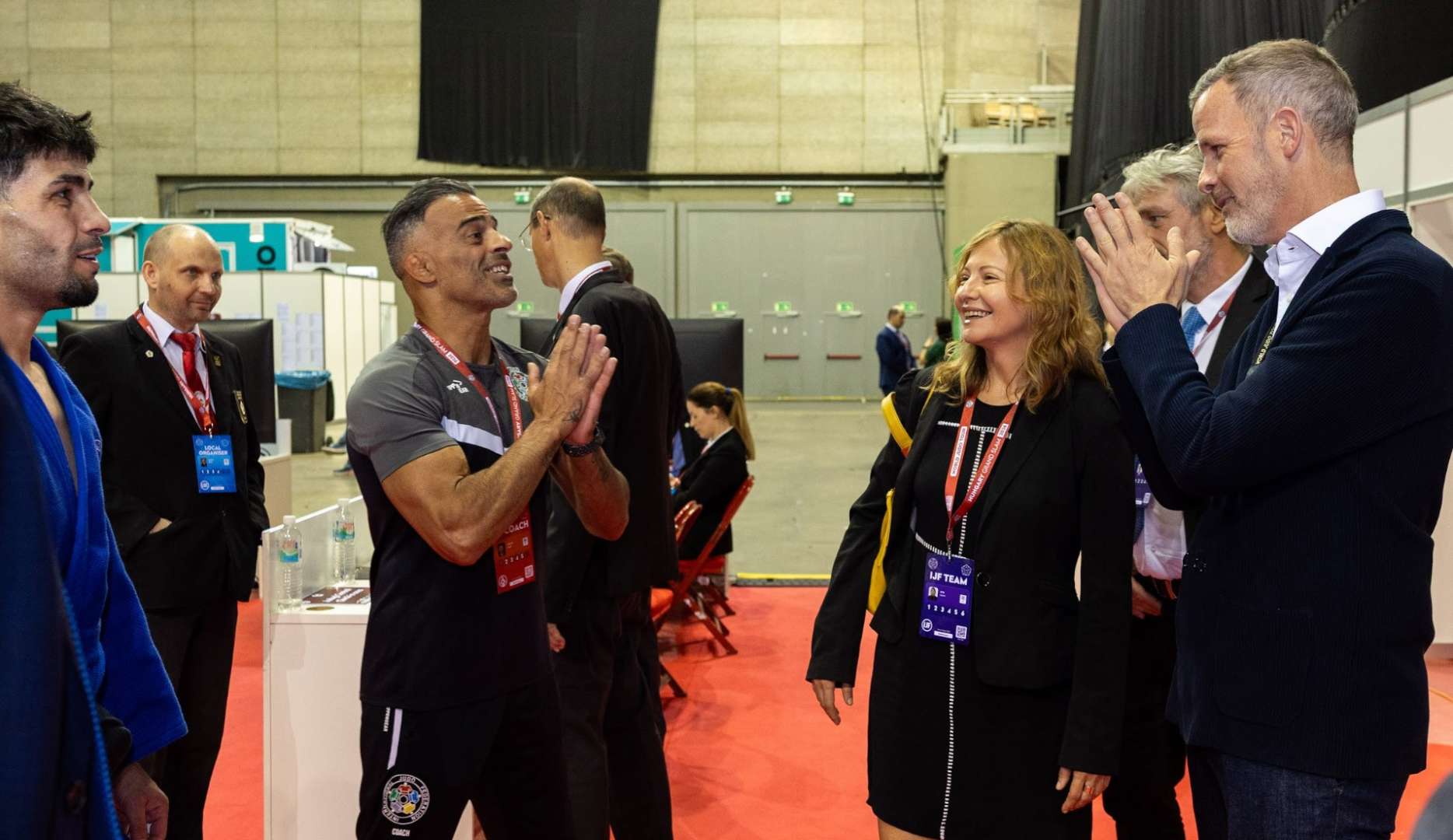
With 504 competitors from 67 countries, the Hungary Grand Slam illustrates both the scale and the growing importance of the Olympic qualification period. For established athletes, it is an opportunity to strengthen their ranking and confirm their position. For others, it may represent an important first experience at the highest international level, facing the best judoka in the world.
“I am impressed by the large number of competitors, knowing that for some of them it is the first time they are entering the big arena and finding themselves confronted with the very best in world judo,” Mr Ducrey continued. “A grand slam such as Lausanne two weeks ago, and this one in Hungary, offer many opportunities to athletes and that is a very good thing.”
The visit also highlighted the consistency and professionalism behind the sporting spectacle. On the tatami, every contest is the result of years of preparation. Beyond it, an event of this scale relies on the co-ordination of a broad team, each person with a specific responsibility and a shared objective.
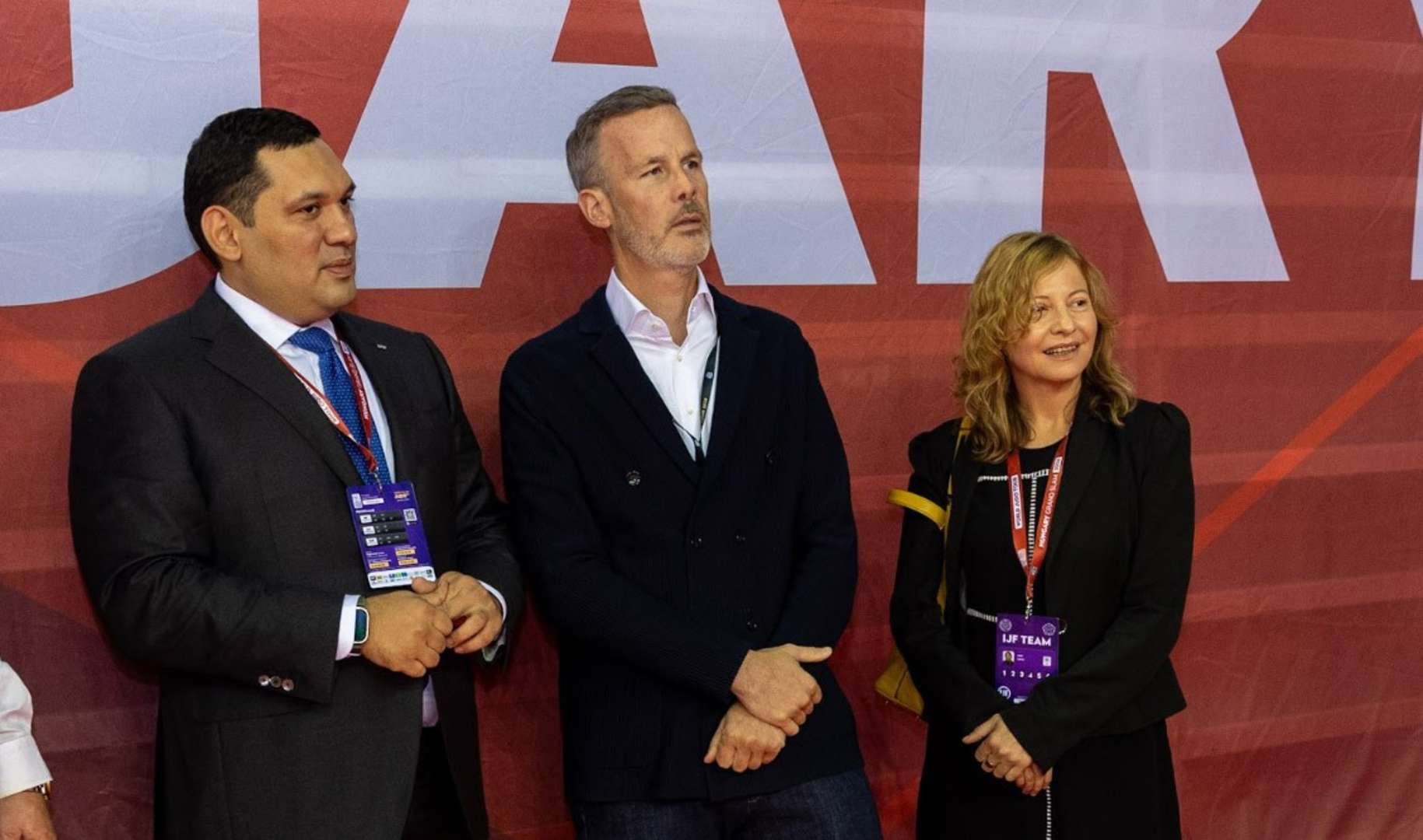
“From a functional point of view, this grand slam is a machine that works well,” Mr Ducrey concluded. “You can feel that everyone is in the right place and doing what they have to do. Each person knows exactly what is expected of them.”
As the road to Los Angeles 2028 gathers pace, the Hungary Grand Slam confirms the place of the World Judo Tour as a demanding and carefully organised stage on which athletes can test themselves, progress and pursue their Olympic ambitions.