
Perhaps this is not unique to judo, although in our sport it has been developed into an art. At first sight, nothing about it seems entirely logical. Judo was created in Japan in 1882 by the young Jigoro Kano Shihan. It is an activity of Japanese origin and its language remains Japanese. Ask someone unfamiliar with judo what ippon-seoi-nage, kumi-kata or hajime means and the answer will almost certainly be, “I have absolutely no idea.”
Even experienced judoka may not always be able to explain precisely what uchi-mata stands for. Yet ask them to demonstrate it and, in less time than it takes to think about it, they will show the technique with complete accuracy. For the record, uchi-mata can be translated into “inner thigh.”
Judo's Japanese origin has also provided more poetic and symbolic names: yama-arashi, the storm on top of the mountain, or tani-otoshi, the drop in the valley. Such expressions make judo something of a singularity in the sporting world. Imagine executing a movement that sends you into a storm at the summit of Mount Fuji before bringing you down into a deep valley.
But to return to the matter of language, once the foundations of judo and the values it conveys have been learned, it becomes possible to understand without fully understanding and to act without having to explain every detail. It may sound paradoxical, and it is, yet it is also why judo is so often described as more than a sport. It is a way of life, an education system and a philosophy that can never be fully completed.
This permanent learning lies at the heart of the humility that inspires, and should inspire, every practitioner. Even the greatest master does not know everything and always has something to learn or discover. Even the finest technician can improve their mountain storm. Even the greatest champion can lose in less than a second.
To grasp all of this, there is terminology to learn by heart, certainly, but above all to absorb in the mind and the body. Then there are the values of which judoka are so proud. Human beings do not create the values: the values shape human beings. This does not mean that a judoka is perfect. It means that they try, as far as possible, to live according to a code capable of helping to build a fairer society, Jigoro Kano’s enduring dream.
This approach to judo is deeply philosophical and philosophy is difficult without words. Yet the magic of judo is that it enables people to grasp, appreciate and embody concepts that may appear abstract but which can be remarkably effective in creating greater harmony and better living together, beyond every difference.
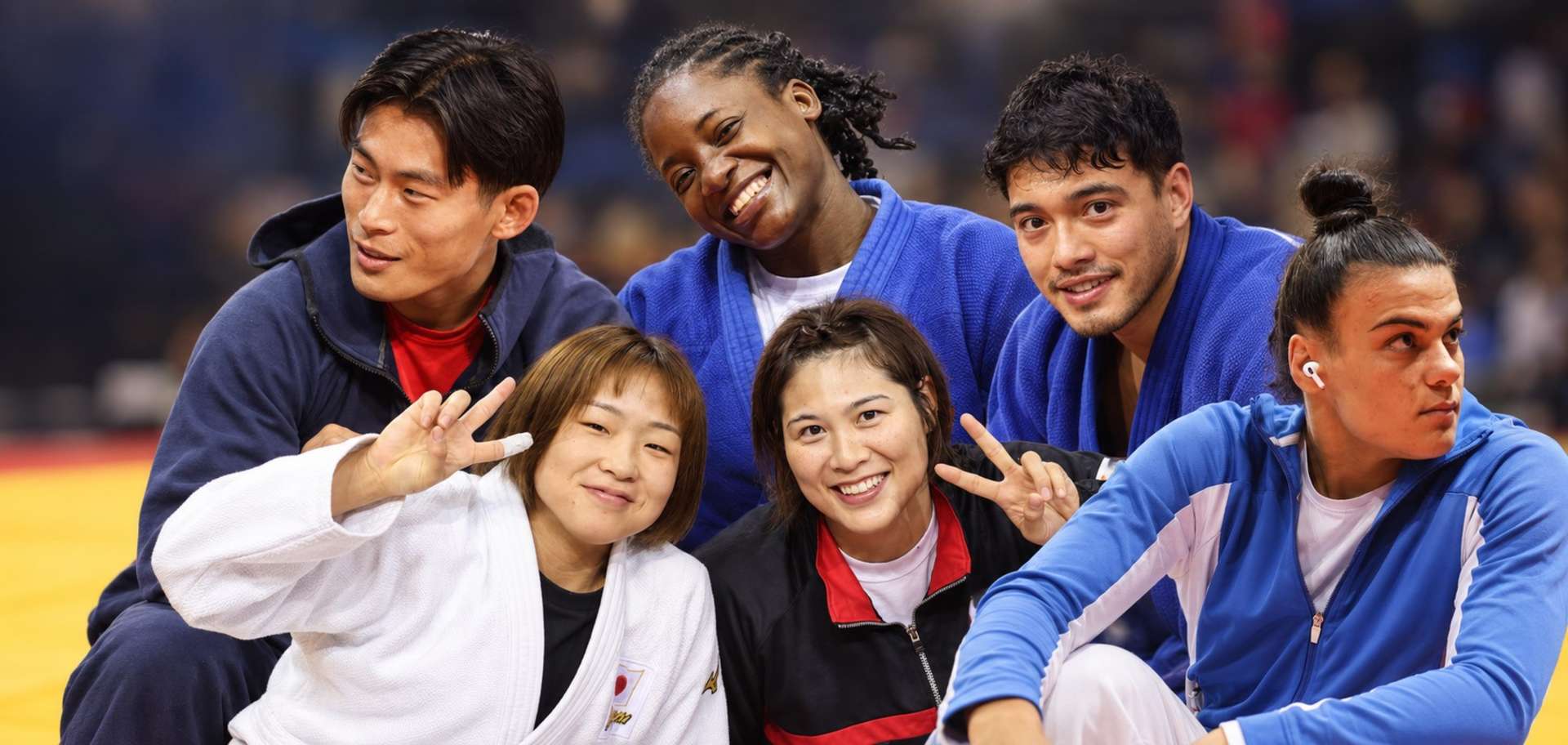
Speaking German, Chinese, Spanish or Russian is therefore not the most important thing. Those languages are part of each person’s identity. When a judoka steps onto the tatami and bows to a partner or opponent, they begin from the understanding that they share one common language: judo.